

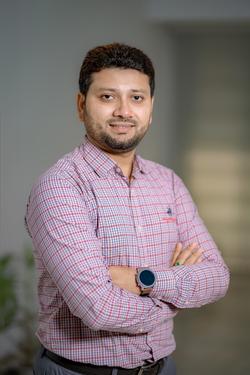
"Our team in Dhaka consists of 4 employees who are experts in the fields of social, chemical, and environmental management. We are working closely together with our factories towards more transparency in our supply chains, factory compliance with the Deltex Sustainability Policy and factory development in the matters of social, chemical and environmental compliance. Our daily work involves conducting audits to assess existing and potential factories for their compliance standards, and supporting factories to improve continuously. Our highest priority is the safety and fair treatment of workers in all our associated facilities."
"In relation to our factory development strategy, we collect data on workers, wage & benefits, safety, chemical use, and other topics by requesting information from all production businesses associated with a product's manufacturing. We frequently provide information regarding our CR system, including our risk assessments, to our partner companies through regular trainings and workshops. We seek to be at the forefront of developments in corporate responsibility, and we work with various certifications and initiatives such as Green Button, Made in Green, GOTS and other organic standards, BeeHive and so on.
We have diversified team members with experience from renowned third-party audit firms and other trading houses. Their knowledge and experience help the factories’ sustainable development growth step by step approach. The orders that our customers place affect us as well. Similar to any other organization that makes purchases, we have the power to change the circumstances at our partner factories by placing orders. Our product line has expanded to include not only garment textiles but also home textiles, tents and other consumer goods. While supply chain transparency is well established in the textile industry, it is a significant issue in other consumer goods sectors. By implementing our internal auditing scheme, which goes further than the well-known standards like BSCI, SMETA, and SA8000, we are here establishing new ground in these industries as well."
" The ongoing challenge for us is operating in the context of a difficult global economic situation post-COVID. Factories are under immense price pressure and receive limited support from the buying side to invest in social and environmental projects. Our focus lies on developing factory capacities organically, using their existing resources as well as seeking cooperation with other stakeholders to achieve the most meaningful impact within these limited resources."
Supply Chain Transparency at the core of our activities
DELTEX is convinced that the journey towards more sustainable production processes can only be achieved if there is mutual understanding of the different needs of all parties involved producing consumer goods. Together with our regional colleagues in the respective production countries, we support our production sites on their way to promote social and environmental standards. We regularly obtain our own picture of our production sites and enter into dialog with local partners and communities. Our focus is on the workers and the surrounding environment. Our cooperation with our business partners is guided by our DELTEX Sustainability Policy, which defines our principles of cooperation and establishes processes. In addition, DELTEX is involved in various projects to respond to emerging challenges with factories:
07/2020-07/2023: Digital Solutions for Substitution of Hazardous Chemicals in the Fashion Supply Chain (GIZ, GoBlu).
The project promoted the digitization of chemical management in textile supply chains using The BHive tool. The tool helps factories organize their chemical inventory, match it against industry standards, and find safer alternatives. Brands and importers benefit by being able to provide transparency on what chemicals are used in their products.
07/2022- 07/2023: Brand Industry Sustainability Program to Improve Social Standards in Textile Factories in Bangladesh
This client-led program is organised and set-up with a local NGO. People working in a textile factory on different hierarchical levels are trained to work on their communication, respect and understanding for each other. Recognition of the need of rights holders is an important feature of the programme.
08/2023-08/2024: Continuation of the Brand Industrial Sustainability Program in Bangladesh. Next to the successful implementation of the Training Programme, the second client-led project focusses on Child Care Centers within the factories. The aim is to create safe and comfortable Child Care Centres and encourage parents to take their children to the Centres where trained nurses are taking care of children and stimulate their development by an appropriate surrounding with equipment, games, and healthy nutrition. The project also includes parents.
Our commitment to industry initiatives
We are stronger together - that is why we are actively involved in industry initiatives to improve standards in our production countries together with stakeholders such as other importers, brands and civil society organizations.
International Accord / RSC Bangladesh / Pakistan Accord
Bangladesh and Pakistan are among our main production sites. We are signatories to the International Accord, Pakistan Accord and RSC Bangladesh in order to promote the development of standards in the areas of building safety, electrical safety and fire protection and to monitor this process in our factories by local experts.

Member of amfori, the leading global business association for open and sustainable trade. We improve the social and environmental performance of our supply chain via amforiBSCI and amfori BEPI.
For more information visit www.amfori.org